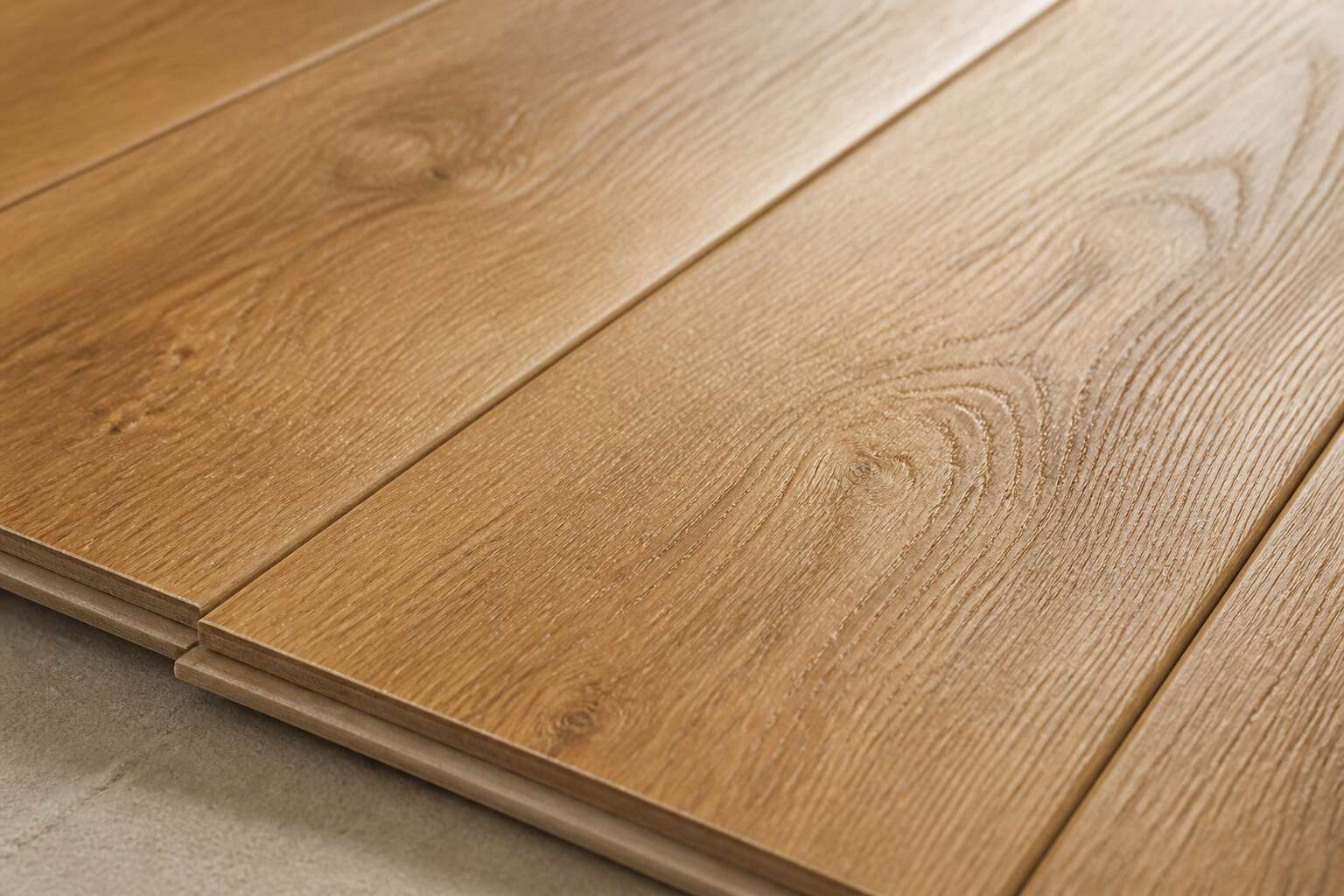
Anatomy of Laminate Flooring
The Core Layer: HDF vs MDF
The core layer determines whether your laminate floor lasts ten years or fails in three. Most buyers stare at the surface print and ignore what is underneath. That is a mistake. When you dig into laminate flooring details, HDF, or high density fibreboard, packs more wood fibre per cubic metre than MDF, and that density makes the difference.
MDF, or medium density fibreboard, costs less and feels similar on day one. Under humidity or heavy foot traffic, it compresses, swells and loses its locking grip. HDF holds its shape.
- HDF density: 800 to 900 kg per cubic metre
- MDF density: 600 to 750 kg per cubic metre
- Locking system stability: clearly better in HDF
South African summers bring real humidity. That is when the core reveals its quality. HDF suits kitchens, bathrooms and busy passageways. The core specification is printed on every product data sheet, and it remains one of the laminate flooring details we use to judge a product.
Wear Layer: Protective Alpha Oxide
The most critical battles for your floor’s longevity happen at the microscopic level. Beneath that appealing photographic layer lies the wear layer, a transparent shield of cellulose infused with corundum, better known as Alpha Oxide. It serves as the silent guardian against scuffs, scratches, and the daily shuffle of life.
Here is the hard truth: not all wear layers are created equal. The amount of Alpha Oxide applied per square meter dictates the floor’s abrasion resistance rating, typically classified under the IP or AC standards. A higher rating means it can withstand the friction of heavy furniture or children’s play without showing battle scars. This is one of those laminate flooring details that separates premium products from budget lookalikes.
While the core structure keeps the planks stable, this top shield controls how long they stay beautiful. When comparing options, look for a wear layer rating that matches your household activity level. It is a pragmatic measure, not a marketing gimmick. Investing in a higher oxide concentration is cheaper than replacing a worn floor prematurely. Remember, the sheen on top is temporary; the oxide concentration is what delivers lasting performance.
Design Layer: High-Resolution Imagery
A floor’s beauty is a crafted deception. In a comparative test, 68% of people could not tell a high resolution laminate from real timber at arm’s length. That trickery starts in the design layer.
This layer, a photographic sheet bonded with melamine, uses rotary gravure printing to capture every grain deviation. High resolution imagery also demands pigment stability, especially under South African sunlight, which can fade weak prints.
- Grain repeat length determines whether patterns look organic or artificial
- Ink density affects depth perception under ambient light
- Base coat opacity prevents the brown core from ghosting through
These laminate flooring details determine whether your floor looks organic or artificial. A strong design layer quietly carries the entire aesthetic load.
Backing Layer: Stability and Moisture Barrier
Backing layers sit at the bottom of every laminate plank. They press against the subfloor, absorbing moisture that rises from concrete or timber. These laminate flooring details rarely appear in marketing photos, yet they decide whether your floor stays flat or cups within two years.
The backing layer is a melamine impregnated paper, thin but dense. It stabilises the plank by counteracting the pull of the wear layer above. It also acts as a vapour barrier. In South African homes, coastal humidity meets winter temperature swings, so that barrier matters.
What does this layer resist daily?
- Hydrostatic pressure from damp screed
- Alkaline salts that attack adhesives
- Micro expansion from overnight cooling
Each threat is silent. Each one can undermine all other laminate flooring details. A strong backing layer keeps the entire plank in quiet equilibrium.
Edge Profiles: V-Groove vs Micro-Bevel
The debate between V-groove and micro-bevel edges often decides the entire character of a room. These are the laminate flooring details that catch the light and define each plank’s shadow line. A V-groove cuts a sharp, distinct angle into the board, creating a deep, defined shadow that mimics authentic, hand-scraped timber. It gives a rustic, robust feel to large spaces, and it does a brilliant job hiding minor subfloor imperfections.
On the flip side, the micro-bevel offers a quieter, more refined aesthetic. This edge is slightly rounded and barely recessed, producing a subtle transition between planks rather than a pronounced cut. The benefits here are practical:
– It creates an incredibly smooth surface underfoot.
– It resists dirt accumulation in the seam.
– It reads as a more modern, seamless floor.
For South African homes dealing with high foot traffic and intense sunlight, the choice is about texture versus subtlety. The V-groove offers that dramatic, wood-like realism, while the micro-bevel prioritises easy maintenance and a sleek finish. Understanding these particular laminate flooring details ensures your floor complements the scale of your room. That decision shapes how the light dances across the surface, influencing both the atmosphere and the long-term wear of your installation.
Choosing the Right Laminate
Thickness and Density: Impact on Durability
Consider this: a laminate plank’s thickness often seduces buyers, yet the density silently carries the load. In Johannesburg’s dry winters and Durban’s coastal damp, both attributes react differently. To choose wisely, you must separate perception from physics.
Thicker boards handle uneven subfloors with greater grace, minimising stress on the locking system. But a high-density core offers superior resistance to point loads, like a dropped wine bottle or a stiletto heel. The two work in tandem, not competition.
- 8 mm: light residential use
- 10 mm: standard family rooms
- 12 mm: heavy traffic areas
Check the manufacturer’s spec for density, ideally above 850 kg/m³. That number reveals more than any finish. These laminate flooring details determine whether your floor cracks under pressure or resists it. The choice is yours, but physics will have the final say.
AC Rating: Abrasion, Impact, and Stain Resistance
An AC rating, short for Abrasion Class, tells you how a floor survives real life. The number combines three tests: abrasion, impact, and stain resistance. A floor can look beautiful yet fail on any one of these.
In South Africa, where homes transition from sandy stoeps to polished interiors, the AC rating matters more than the finish. AC3 suits bedrooms. AC4 handles open-plan living areas where dogs and kids gather. AC5 is for commercial spaces.
Here’s what the rating actually measures:
- Abrasion: how the surface holds up against foot traffic and grit
- Impact: how it responds to dropped objects
- Stain: how it resists spills from red wine to coffee
These laminate flooring details separate a floor that lasts from one that fades. The rating reflects your household’s behaviour, not the showroom’s lighting.
Texture and Finish: Smooth, Handscraped, or Embossed
Before your eyes register colour, your hand has already judged the surface. Smooth finishes create a clean, contemporary silhouette, but they show every scuff in bright South African sunlight. Handscraped textures hide daily wear while adding depth that mimics aged timber. Embossed surfaces sync the grain with the design layer beneath, so your fingers trace the same lines your eyes see. I’ve seen buyers choose purely on that tactile moment.
Consider how each texture responds to bare feet, pet claws, and the grit that finds its way indoors!
- Smooth is easiest to sweep and wipe, but gloss exposes every scratch
- Handscraped hides dirt and feels rustic underfoot
- Embossed matches the print and looks the most convincing
These laminate flooring details decide how the space feels every day. No texture is superior across the board; each earns its place through daily use.
Water-Resistance: Suitability for Kitchens and Baths
Water damage accounts for nearly a quarter of all home insurance claims in South Africa, yet many homeowners treat laminate like a fragile houseguest that must never meet a mop. That is a mistake. Modern laminate has evolved, but the term “water resistant” still carries fine print. The real battle happens in the core, not the surface. When moisture sneaks past the joints, it swells the HDF from the inside out. Once that happens, no amount of drying will reverse the damage.
The distinction boils down to what you plan to expose the floor to. A kitchen with a dishwasher that occasionally leaks needs a different product than a guest bathroom used twice a week. Look for laminate flooring details that specify a moisture-resistant core rating. These are called laminate flooring details for a reason. They matter.
– Check the manufacturer’s rating for standing water resistance, not just spills.
– Look for sealed edges or locking systems that repel moisture at the seams.
– Confirm the warranty covers humidity exposure, not just surface stains.
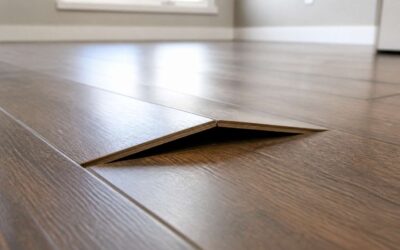
Brands like Kronotex and Egger offer high-pressure laminate lines built for wet zones.auestions about installation should address expansion gaps and underlayment. In coastal areas like Durban, humidity alone can cause swelling if the product is not rated for it. The core is the hero here, not the glossy top layer. Choose wisely, and your kitchen floor survives the inevitable flood from a forgotten tap. Choose poorly, and you get a wavy mess that resembles a topographical map of the Drakensberg.
Style and Color: Mimicking Natural Materials
In South Africa, the Highveld sun does more damage to interior finishes than most homeowners realise. The right colour choice goes beyond aesthetics. Laminate flooring details now include UV-stabilised imagery that mimics rare hardwoods or slate without the maintenance burden. A printed oak plank at a fraction of the cost is a calculation, not a compromise.
Consider the room’s light. A north-facing Johannesburg lounge will wash out pale tones, while a Cape Town winter makes dark floors feel heavy. Style should echo the surrounding landscape. For a coastal home, grey-washed finishes complement the Atlantic light. For a Bushveld retreat, warm acacia tones bring the veld indoors.
Popular mimicry options:
- French oak with a wire-brushed texture
- Travertine stone effects for patio to indoor transitions
- Reclaimed timber looks for farmhouse authenticity
Colour continuity matters. A floor is the largest surface in a room. Match undertones to cabinetry or stone countertops. The best laminate flooring details hide the repetition of the pattern. This is how you get wood’s visual warmth with a surface that tolerates bare feet and dropped keys.
Installation Essentials
Subfloor Preparation: Leveling and Cleaning
In my years of inspecting installations, the subfloor is often overlooked. A uneven base, a dusty surface, those are the culprits behind clicked planks that fail within months. For laminate flooring details, start with a flat slab: variations beyond three millimeters per meter cause joints to gap or buckle. Use a self-leveling compound for hollows; grind down high spots.
Cleaning is equally non-negotiable. Sweep, then vacuum dust, which can abrade the locking system over time. A damp mop with mild detergent removes grease, but let it dry completely before laying any underlayment. Check for moisture using a film test; if condensation appears, install a vapor barrier.
- Use a two-meter straightedge to assess flatness.
- Remove existing adhesive or paint residue.
- Fill cracks wider than a credit card with patching compound.
Preparation time pays off in longevity. Ignore it, and every floorboards shifts, creaks, or swells.
Acclimation Process: Avoiding Gaps and Warping
Nearly every warranty claim I have witnessed traces back to a plank that never learned the climate of the room it now inhabits. Acclimation is not a courtesy. It is the quiet requirement that keeps laminate flooring details from splintering into regret.
Place the sealed boxes in the centre of the room, away from exterior walls and air conditioners. Leave them for 48 hours at the temperature the space will actually live at. The material adjusts. Hurry this and the boards will cup, gap, or warp within months!
- Stack boxes flat, never on their edges.
- Maintain a consistent 18 to 24 degrees Celsius.
- Keep humidity between 40 and 60 percent.
Many installers skip this vigil entirely. The floors looked flawless on day one. By the first winter, the joints gaped and creaked.
Underlayment Selection: Foam, Cork, or Rubber
Underlayment is the unsung layer beneath your feet. Foam, cork, and rubber each alter the walking experience in distinct ways. Foam offers a budget friendly cushion and modest noise reduction. Cork adds natural resilience and a bit of thermal comfort. Rubber is the heavyweight champion, ideal for high traffic zones or ground floor installations. The choice transforms stability and feel. But these laminate flooring details also govern moisture defence. A concrete slab demands rubber with a built in vapour barrier. A wooden subfloor pairs better with cork, which breathes without trapping humidity. Consider your lifestyle and subfloor before committing. A simple test helps:
- Press your thumb into each sample for 10 seconds
- Drop a coin from waist height to compare sound
- Stand on one sample for a minute to gauge firmness
Each material brings its own character. Select with intent.
Laying Pattern: Straight, Diagonal, or Herringbone
Laying the boards is where a room finds its soul, and the pattern you choose dictates the entire visual rhythm. These laminate flooring details are not merely aesthetic; they are a structural dialogue with your space. A straight lay, running parallel to the longest wall, offers a classic, orderly progression. It is the safest narrative, guiding the eye with clean, uninterrupted lines. For a sense of dynamic movement, a diagonal installation expands a narrow room, creating a visual push that feels deliberate and energetic. Then there is herringbone, a pattern of intricate, interlocking drama that adds a tailored, woven texture to the floor. This is the choice for a statement, though it demands precision and patience.
Beyond the visual, practicality should guide your hand. Consider these key advantages:
1. Straight patterns produce the least waste, making them a budget-conscious choice.
2. Diagonal layouts can cleverly disguise the fact that walls are not perfectly square.
3. Herringbone provides superior dimensional stability in the flooring itself.
Weighing these laminate flooring details against the personality of your home will lead you to the correct path. The pattern is the final signature, the silent language of your interior.
Cutting Techniques: Tools and Safety Tips
Installation demands precision, and that starts with the correct tools. A jigsaw is essential for cutting around door frames and heating vents, while a circular saw with a fine-tooth blade handles the long, straight cuts. Remember to score the decorative side before you cut with a utility knife for a cleaner edge. The saw’s base plate can scratch the laminate, so place masking tape along the cut line. For safety, always wear protective eyewear and a dust mask. The laminate dust is fine and irritates the lungs. Keep your hands clear of the blade and use a push stick for narrow pieces. Never force the material through the saw; let the blade do the work. A dry, clean cut prevents chipping and ensures the locking system engages correctly, giving you a tight, durable seam.
Expansion Gaps: Accounting for Movement
Expansion gaps are the floor’s breathing room, and in Cape Town’s swinging humidity, they become survival geometry. Skimp on the 10mm perimeter gap, and those interlocking boards will push against the skirting with quiet fury. These laminate flooring details separate a sound surface from a buckling mess.
Install spacers along every wall.
- Keep the gap parallel to the wall’s curve
- Allow extra space around fixed cabinetry
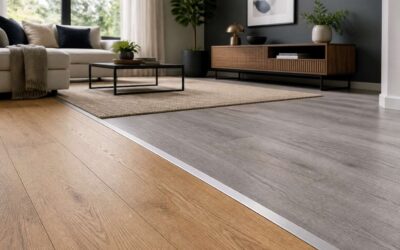
- Use transition profiles at doorways
The gap disappears under skirting, but never stops working. I have seen floors shrug when the heat rises. Respect the movement, and your floor behaves civilly!
Maintenance and Longevity
Cleaning Best Practices: Dry vs Damp Methods
The arid South African climate presents a peculiar test for laminate floors, where airborne grit creates a constant, abrasive friction. These laminate flooring details dictate a strict dry-first approach. A soft-bristle broom or a microfibre dust mop captures those abrasive particles before they grind against the protective alpha oxide surface.
Damp methods require a re-calibration of expectations. The backing layer provides a degree of water resistance, but seam edges remain vulnerable to capillary action. Mist the mop, do not soak it! The moisture should evaporate within seconds, leaving no standing beads.
- Daily dry sweeping removes the dangerous silica and sand.
- Weekly damp mopping with a well-wrung mop handles bio-films and sticky residues.
- Immediate spotting of spills prevents liquid ingress.
The equilibrium rests on this tension. Dry tools maintain optical clarity and surface integrity, while the damp mop addresses what the broom cannot. These laminate flooring details protect the material’s structural equilibrium against humidity fluctuations inherent to coastal and Highveld regions.
Preventative Measures: Furniture Pads and Rugs
Furniture pads and rugs prevent the scratches that shorten a floor’s lifespan. A dining chair dragged across the surface can gouge the protective layer in a single motion. Felt pads distribute the weight of table legs and sofa posts. These laminate flooring details need quarterly checks; a grit-embedded pad becomes sandpaper.
The South African summer means more braais and gatherings. Hosts shift furniture to accommodate guests, and bare feet cross the floor. Rugs handle the heavy foot traffic near doorways and under pet beds. Choose a natural fibre rug with a breathable backing to avoid trapping moisture beneath.
- Replace felt pads when they lose their smooth surface.
- Use rugs with non-staining backings in entryways.
- Keep heavy furniture on wide, flat coasters.
These laminate flooring details preserve the surface beneath your furniture, so the floor stays visually consistent.
Minor Repairs: Replacing Damaged Planks
Even the most careful household eventually faces a cracked plank. A dropped cast iron pot or a shifted bookshelf can leave a fracture that no rug can hide. The advantage of laminate is that you don’t need to tear up the whole floor. You can replace the damaged plank alone, provided you have a few spare boards from the original installation.
Gather the essentials before you start:
– A circular saw
– A pry bar
– A hammer
– Wood glue
First, clear the room and remove the baseboard near the affected area. Cut through the damaged plank’s center, then pry it out in pieces. The new plank clicks into place once you trim the tongue from its long side and apply glue to the seam. This repair takes about an hour!
These laminate flooring details matter because a mismatched replacement will stand out. Keep a record of your floor’s batch number and style name. That way, the new plank matches the existing colour and texture perfectly.
Scratch Resistance: Understanding the Limits
The first scratch will find its way to your floor by nightfall of the first day, as if summoned. It happens despite the rugs, despite the felt pads, despite the careful lowering of heels. In the quiet lamplight you will crouch and trace the pale line with a fingertip, that thin confession of daily life. The wear layer of your laminate is a guardian, but even guardians have their limits.
Scratches, those fine silver threads across the grain, behave like memories. Some are shallow enough to dismiss, but others cut deeper into the pattern below. The true foe is not the single scrape but the cumulative assault of grit, sand, and the small stones that cling to a dog’s paw. Within the pale of those resilient details, the laminate holds firm, yet it will ultimately yield to a deliberate abuse, a dragged appliance or the repeated scuff of a heavy chair across the same spot.
The floor endures because it is designed to, but it asks for your vigilance in return.
- Abrasion from foot traffic, which dulls the finish gradually
- Cracks from dropped tools or the sharp corners of heavy objects
- Tears from furniture legs that are moved without protection
- Discolouration from prolonged exposure to direct sunlight
These are the silent enemies. You will notice the scratches when they catch the light at a certain angle, a moonlit web across the boards. They are the record of your days, the archaeology of your household. The best way to understand these laminate flooring details is to know precisely what your floor can forgive and what it cannot. The rest is simply patience with the inevitable.
Moisture Control: Spills and Humidity Management
In Cape Town, the summer humidity can raise moisture levels inside a home within hours. This is where laminate flooring details truly matter. A spilled glass of rooibos tea left unnoticed for an hour will test the seams of your planks. Spills require immediate wiping, because moisture absorption starts at the edges where the boards meet.
Humidity control is another layer of protection. A stable climate prevents the planks from swelling or shrinking. Coastal air in South Africa carries dampness, so a dehumidifier in winter and proper ventilation keep the planks stable. Check your room for these sources:
- Leaking pipes beneath basins
- Condensation from air conditioners
- Mud and water tracked from rainy gardens
Each one adds to the load your floor carries. Managing moisture is not about perfection, it is about awareness.
Comparative Insights
Laminate vs Hardwood: Performance and Price
The price gap between laminate and hardwood on the South African market is substantial. Hardwood planks, particularly imported species like oak or merbau, can cost triple the amount of quality laminate. Yet the total cost of ownership tells a more nuanced story. Hardwood can be sanded and refinished several times, extending its usable life for decades. Laminate, once worn through, requires replacement.
Performance differences also shape the decision. Consider these points:
- Laminate resists scratches and dents better than most hardwoods, making it suitable for homes with pets.
- Hardwood offers superior acoustics and a warmer footfall underfoot.
- Laminate handles humidity shifts more predictably, whereas hardwood expands and contracts with seasonal changes.
These laminate flooring details matter when calculating long term value in Cape Town or Durban. Hardwood appreciates resale value in certain suburbs, while laminate delivers affordability without sacrificing appearance. The choice rests on your household priorities.
Laminate vs Vinyl: Water Resistance and Feel
Vinyl leads the water resistance category, and for good reason. Its core layers are inherently waterproof, whereas laminate depends on sealed construction that resists moisture but does not repel it indefinitely. That is one of those laminate flooring details that becomes critical in coastal South African homes where humidity lingers.
The feel differs considerably. Laminate provides a firmer, more solid footfall underfoot. Vinyl, especially cushioned ranges, gives slightly under pressure and can feel hollow in large open rooms. I have seen homeowners notice this within minutes of walking across both.
- Laminate suits living areas and bedrooms where comfort is the priority.
- Vinyl suits bathrooms, laundry rooms, and poolside spaces where spills are routine.
Texture also separates them, with laminate’s embossed grain carrying a closer resemblance to real timber.
Laminate vs Tile: Comfort and Installation
Walk across a tiled floor in a Johannesburg winter and you will feel the cold rising through your soles. Laminate never delivers that shock. It sits closer to room temperature and gives slightly underfoot, which makes long hours in the kitchen or study far more forgiving on the joints.
Installation separates these two materials cleanly. Tile demands a screeded base, mortar, spacers, and a tiler who knows how to keep lines true. The laminate flooring details are simpler. Click-lock planks, a decent underlay, and a weekend of careful cutting. I have seen homeowners finish an entire lounge in two days!
- Tile work requires curing time before you can walk on it.
- Laminate is ready for furniture the moment the last row clicks into place.
Should you ever want to change the space, laminate lifts out and moves with you. Tile stays behind, embedded in the structure of the home.
Cost Analysis: Material, Installation, and Long-Term Value
The real accounting begins long after the price tag is peeled away. Material costs for laminate sit markedly lower than stone or ceramic, but the deeper savings hide in installation and the years that follow. I have watched budgets crumble over mortar and labour fees. Laminate flooring details spare you that expense.
- No screeding or curing time, so no contractor waiting on the calendar.
- A click-lock system invites a confident DIYer, which nullifies professional labour costs.
- Damaged planks replace individually, sparing you the cost of a full relaid floor.
The value compounds because laminate resists thermal shock, chipped edges, and the cold seepage that drives up heating bills. Over a decade, the total cost remains lower for laminate.
Environmental Impact: Sustainability and Recycling
The environmental narrative around flooring often gets tangled in absolutes, but the reality of laminate offers a more pragmatic shade of green. At its core, this product is a study in resource efficiency. It utilizes high-density fiberboard, a material engineered from recycled wood fibres and sawmill residue, meaning a single tree yields far more square footage of finished flooring than it ever could as solid lumber.
Consider the manufacturing calculus. Where hardwood milling can discard up to half of a log as waste, the laminate process repurposes that chaff into a usable core. This detail matters when you trace the provenance of your renovation. The wear layer, composed of aluminium oxide, is applied in microscopic amounts, yet it provides the abrasion resistance that extends the floor’s lifespan. A longer service life is the quiet cornerstone of sustainability, delaying the extraction of virgin materials for a decade or more.
We should also examine the lifecycle savings that sit outside the carbon ledger. Because laminate mimics wood, stone, or tile without the heavy transport footprint of quarried rock, the logistics emissions drop significantly. Furthermore, modern production lines in several major plants capture the residual dust and trim, pressing it back into the board, a closed-loop tactic that keeps waste out of the landfill. When the day eventually comes for replacement, the core is biologically inert, making it a candidate for energy recovery rather than a permanent resident of the rubbish heap.
For the eco-conscious homeowner, the key points are straightforward:
- Low-VOC adhesives and finishes are now standard in reputable brands, safeguarding indoor air quality
- Core boards often carry CARB or FSC certification, verifying responsible fibre sourcing
- The multi-layer construction means fewer raw materials per square meter than ceramic or engineered wood
Ultimately, the sustainable choice isn’t always the one that sounds the greenest; it is the one that reduces immediate waste, lowers energy output, and performs flawlessly for years. When you read the technical sheets, look past the marketing gloss. The true environmental credential of laminate lies in its intelligent use of wood fibres and the stubborn durability that keeps it in your home, out of the incinerator, and off the logging truck for decades. This is the most vital detail of all.

0 Comments